Direct-Method Technique for Fabricating Temporary Plastic Restorations
The polymer composition is prepared by mixing the powder and liquid phases in proportions strictly regulated by the manufacturer's instructions.
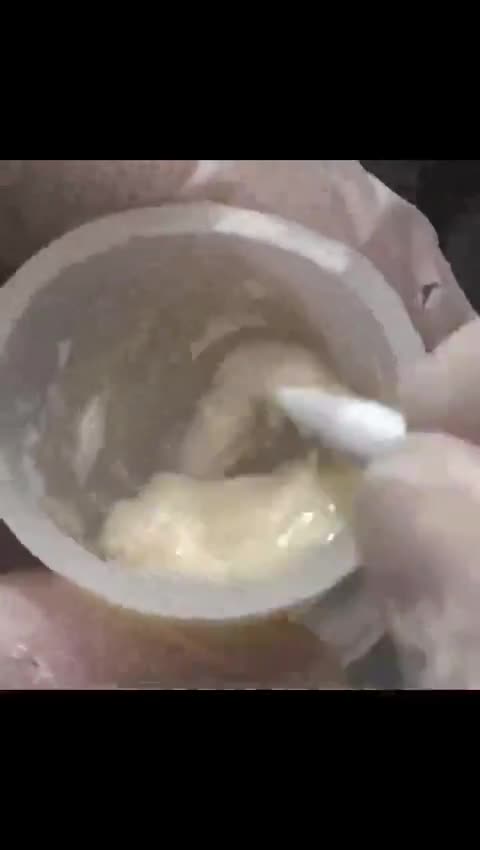 👆 video
The demonstration video shows fabrication on a plaster model, but in clinical practice this method is applied directly in the oral cavity. Restorations are most often placed on the upper jaw involving the first premolars, and single-abutment bridge prostheses supported on teeth 1.6 or 2.6 are frequently used. Experience shows that bridge span length can vary — reaching six to eight units.
👆 video
The demonstration video shows fabrication on a plaster model, but in clinical practice this method is applied directly in the oral cavity. Restorations are most often placed on the upper jaw involving the first premolars, and single-abutment bridge prostheses supported on teeth 1.6 or 2.6 are frequently used. Experience shows that bridge span length can vary — reaching six to eight units.
There are core technological rules to follow. The widespread belief among dentists that this method is excessively time-consuming — often cited as a reason to avoid it — is mistaken.
Careful study of the physico-mechanical properties of the material used is of primary importance. For example, the Japanese "Tempron" is characterized by increased strength but is available in only one shade (A3); the American "SNAP," by contrast, offers a palette of six shades but is weaker. The objective characteristics of other systems cannot be reliably assessed.
Once the curing time parameters have been studied and memorized, work can begin. The material's heating temperature must always be taken into account, and the patient should be warned about it in advance. To monitor temperature, it is recommended to keep a container of water on hand.
When the so-called "putty" phase is reached, the polymer mass is applied to the defect area — whether a single crown or a bridge.
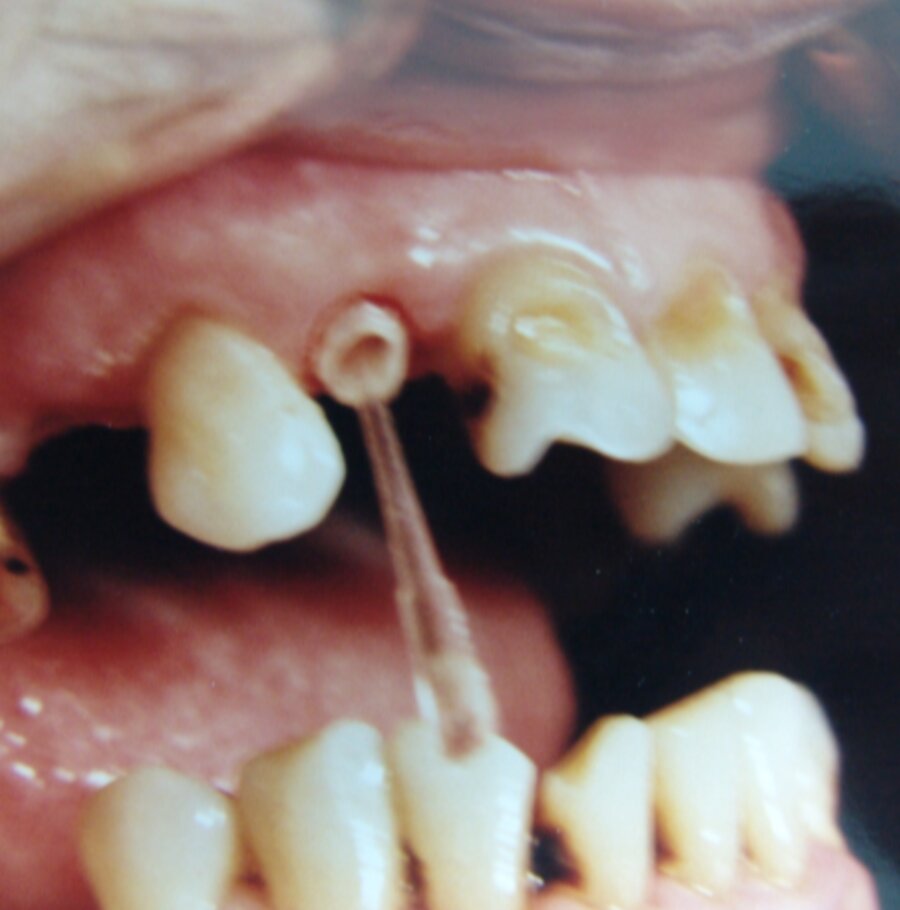 👆 photo
At earlier stages of curing, the composition can be introduced into the root canal using a lentulo spiral, followed by placement of a fiberglass-free post. After this, one waits
👆 photo
At earlier stages of curing, the composition can be introduced into the root canal using a lentulo spiral, followed by placement of a fiberglass-free post. After this, one waits
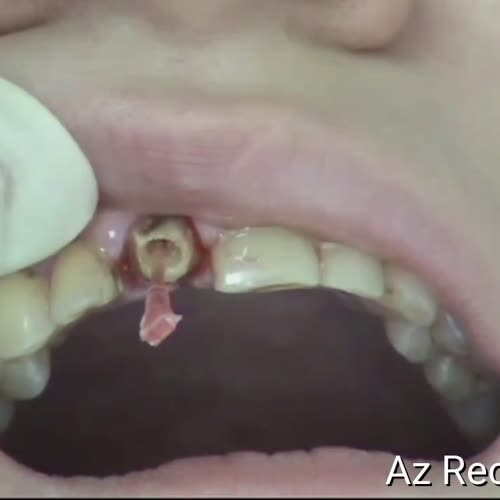 👆 video
for the "putty" curing phase to complete, then continues the procedure according to the clinical protocol.
👆 video
for the "putty" curing phase to complete, then continues the procedure according to the clinical protocol.
The clinical case shown here demonstrates the fabrication of a single crown. However, this approach also applies to bridge prostheses, including constructions with three to four abutments, provided the prepared abutment teeth are parallel. Naturally, applying this technique requires taking into account how important the moment is for the patient — whether an upcoming event (a wedding, birthday, or other occasion requiring flawless aesthetics on short notice) — in the context of prosthodontic care.
Fabricating extended restorations (5–6 units) takes a single clinical visit lasting about one hour and is done WITHOUT involving a dental laboratory, allowing the patient to receive a finished restoration on the day of the visit — unlike the multi-day, multi-visit protocols of conventional fabrication.
Returning to my own protocol: once the polymer mass reaches a rubber-like consistency, the initial trimming of excess material on the future restoration is done with scissors.
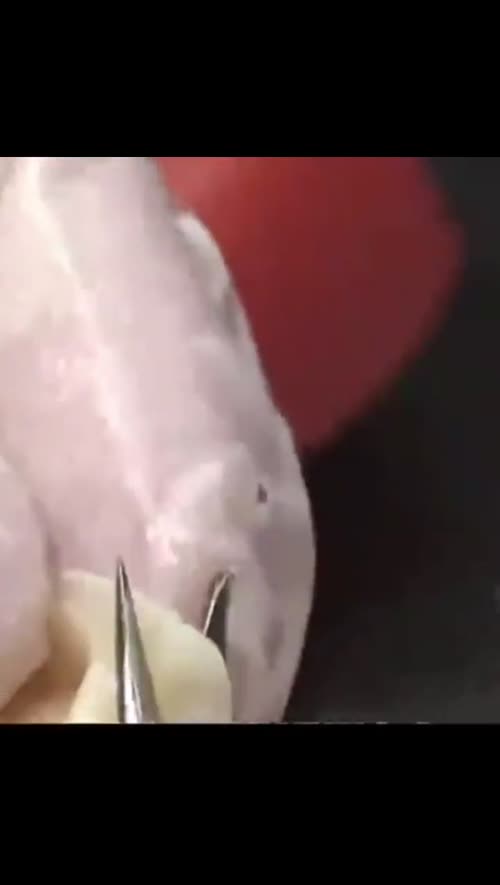 👆 video
Finger-shaping (pressing) of the material is then repeated: the patient is asked to close their teeth to fix the occlusal relationships, and the index finger is used along the vestibular arch to give the surface its final contour.
👆 video
Finger-shaping (pressing) of the material is then repeated: the patient is asked to close their teeth to fix the occlusal relationships, and the index finger is used along the vestibular arch to give the surface its final contour.